
Azure Policy
Azure Policy is Azure's governance service for enforcing organizational standards and assessing compliance at scale. It evaluates resources by comparing their properties against business rules defined in JSON — known as policy definitions — and reports whether each resource is compliant.
Policy definitions can be grouped into initiatives (policy sets) for managing related rules together. Once assigned to a scope — a management group, subscription, resource group, or individual resource — Azure Policy continuously evaluates resources and can respond to non-compliance through effects such as audit, deny, modify, or deploy-if-not-exists remediation.
Common use cases
- Restricting resource deployments to allowed regions or resource types
- Enforcing consistent tagging and taxonomic standards
- Requiring diagnostic logging to a Log Analytics workspace
- Remediating existing non-compliant resources without manual intervention
Through Azure Arc, policy-based governance can extend beyond Azure to other cloud providers and on-premises datacenters.
Connection to CCC
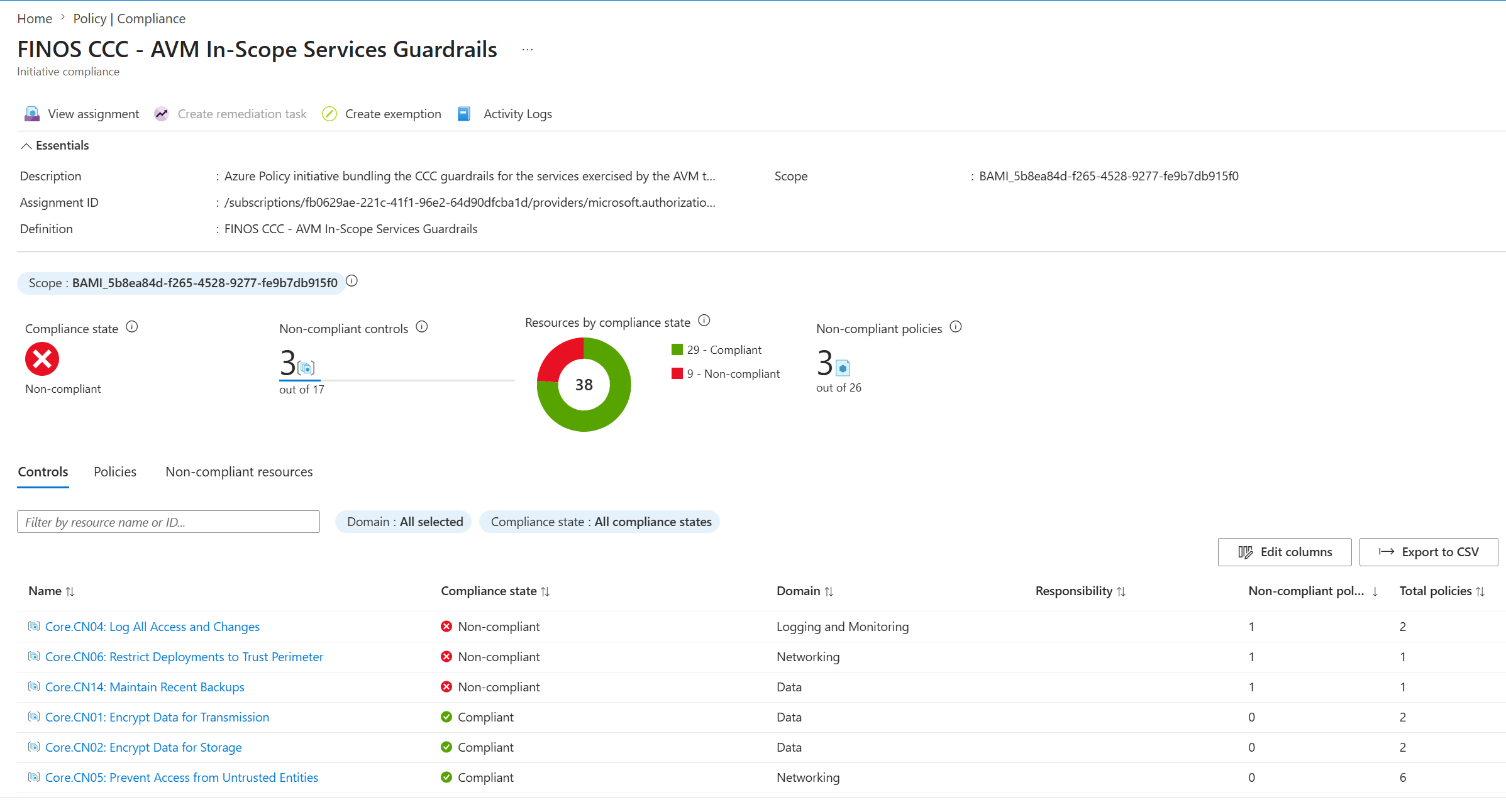
CCC catalogs define vendor-neutral controls and assessment requirements for cloud services. Azure Policy provides the enforcement layer on Azure — CCC controls can be mapped to policy definitions and initiatives that continuously evaluate and remediate resources, turning open standards into automated compliance in your Azure environment.